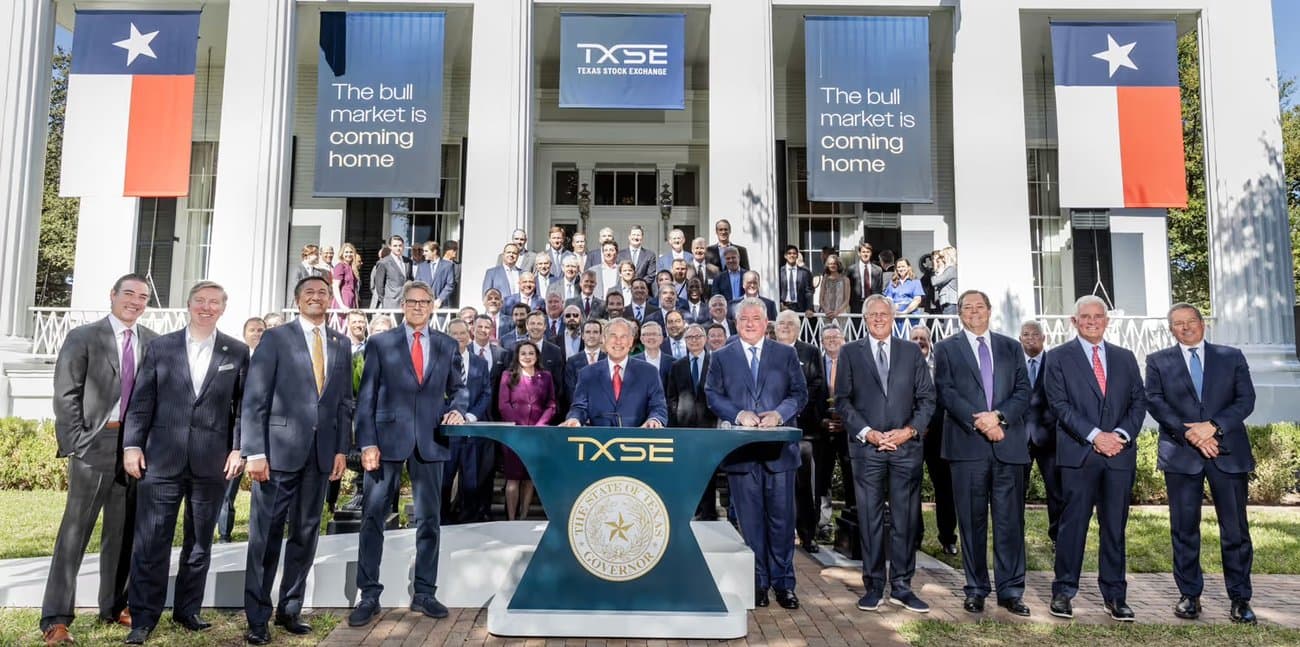
The Texas Stock Exchange is scheduled to begin live trading Friday, July 10, marking a notable step for a Dallas-built financial market that has become part of Texas' broader economic-development story.
TXSE told members in a July 2 notice that it would begin trading designated test securities Monday, July 6, before moving to live trading Friday, July 10. The exchange listed regular trading hours from 9:30 a.m. to 4 p.m. Eastern, with a pre-market session from 8 a.m. to 9:30 a.m. and a post-market session from 4 p.m. to 5 p.m.
The launch follows a Sept. 30, 2025, order by the U.S. Securities and Exchange Commission approving Texas Stock Exchange LLC's application to register as a national securities exchange. In that order, the SEC said TXSE's amended application met the requirements of the Securities Exchange Act and related rules.
Why it matters economically
TXSE describes itself as a fully integrated, electronic, national securities exchange built and headquartered in Dallas. The exchange says it is focused on helping U.S. and global companies access U.S. equity capital markets and is on track to provide a venue to list and trade public companies and exchange-traded products in 2026.
That matters because an exchange is more than a trading symbol. A successful exchange can sit inside a larger financial-services network that includes broker-dealers, market-technology providers, compliance teams, attorneys, accountants, data vendors, asset managers and corporate finance advisers.
Sherman is about 60 miles north of Dallas, where the launch strengthens a regional business story already moving up the North Texas corridor. TXSE does not create a Sherman office, but it can add momentum to the finance-and-technology network that regional employers and service firms plug into.
A Texas growth signal
The launch also fits Texas' broader economic-development message. The Texas Economic Development Corporation points to the state's large workforce, infrastructure, tax climate and business base as reasons companies evaluate Texas for expansion.
TXSE does not change those fundamentals by itself. But if the exchange grows, it could give North Texas a larger role in the capital-markets industry and add another institution to the region's finance and technology ecosystem.
The early rollout is still measured. The practical impact for investors, companies and the regional economy will depend on participation, liquidity, listings and execution quality over time.